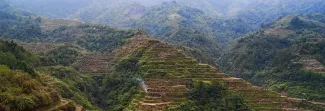
Climate Change, Tourism, and World Heritage Sites: Environmental Changes, Social Adaptation and Community Resilience
The UNESCO UNITWIN Network "Culture, Tourism, Development", founded in 2002, will celebrate its 25th anniversary in 2027.
To mark this milestone, the Network will organise an international symposium to be held at the Institut national d'histoire de l'art (INHA), Paris, from 1 to 3 July 2027, dedicated to exploring the role of the complex relationship between heritage and tourism in the context of climate change.
Its longevity has enabled the Network to address, over recent years, the challenges faced by heritage and in particular World Heritage at the beginning of the 21st century.
Bringing together members from 32 universities across four continents, the symposium will approach heritage in its broadest sense, encompassing not only heritage sites but also their environmental, anthropogenic, and natural ecosystems. The role of local communities will be central to the discussions, shifting the focus from World Heritage itself to the communities living in and around it.
Call for papers
Submissions
Proposals may be submitted in French, English, or Spanish via the online submission form available at the following link: https://forms.gle/sVddWFxZCqWUTPEc9
Proposals must be 500 words in length and must include: the title of the paper; the names and affiliations of the co-authors; 5 keywords; the context and methodology used; and a maximum of 5 main references relevant to the paper. Proposals must also be accompanied by a 200-word biographical note for each (co-)author.
Review process
Abstracts will be reviewed by the Scientific Committee. Full papers accepted for publication will undergo editorial review by the Scientific Committee.
Dates
Submission of the abstracts: November 30th, 2026
Notification of acceptance: December 20th, 2026
Final submission of papers, in accordance with the template to be sent to accepted authors: April 1st, 2027
Conference dates: 1–3 July 2027
Registration fees
UNITWIN-UNESCO members 200€
Non-members 300€
PhD and Master Students (with University ID) 100€
The full Call for Papers is available here (PDF EN - 601 Ko)
Contact:
Context
The World Heritage and Sustainable Tourism Programme which represents a new approach based on dialogue and stakeholder cooperation where planning for tourism and heritage management is integrated at a destination level, the natural and cultural assets are valued and protected, and appropriate tourism developed, together with the Policy for the Integration of a Sustainable Development Perspective into the Processes of the World Heritage Convention , reflects this important evolution towards more integrated and people-centered approaches to heritage management. This approach is also fully in line with and the ARCHE Strategic Research and Innovation Agenda and the recommendations of the European Partnership for Resilient Cultural Heritage, which aim to address the challenges associated with the scarcity of research and data concerning adaptation strategies and the impact of climate and environmental change on cultural heritage; as well as to address the need for a better understanding, greater use and increased recognition of how cultural heritage can inform policies and guide implementation measures, particularly through the role of traditional and local knowledge.
Topic
World Heritage Sites are increasingly at the forefront of the global climate crisis. Rising sea levels, coastal erosion, floods, droughts, heatwaves, desertification, biodiversity loss, and extreme weather events are profoundly transforming both natural and cultural heritage sites across the world. Climate change is not only an environmental phenomenon, but it also acts as a powerful social stressor, intensifying inequalities, reshaping mobility patterns, exacerbating resource scarcity, and contributing to political instability and conflict. These transformations directly affect heritage sites, tourism economies, and the communities that live in, manage, and depend upon these places. The World Heritage Convention has been at the forefront of exploring and managing the impacts of climate change on World Heritage sites since the early 2000s. In 2023, a new Policy Document on Climate Action for World Heritage was adopted .
Tourism occupies a particularly complex position within this context.
On the one hand, tourism generates financial resources for conservation, employment, and local development. On the other, it can increase pressure on fragile environments, contribute to carbon emissions, accelerate gentrification and social exclusion, and heighten the vulnerability of local populations already exposed to climate risks. In many heritage destinations, climate change is beginning to alter tourist flows, seasonal patterns, infrastructure needs, and the long-term viability of local economies based on tourism.
These dynamics extend beyond the material fabric of heritage sites to encompass intangible cultural heritage and living heritage communities. Climate-induced displacement, environmental degradation and the erosion of traditional ecological knowledge represent compounding threats to the intangible dimensions of World Heritage, dimensions which are central to the 2003 Convention on the Safeguarding of Intangible Cultural Heritage and to the community-centred paradigm that increasingly defines UNESCO’s normative framework. Accordingly, contributions addressing the intangible dimensions of climate vulnerability are particularly encouraged.
At the same time, broader social consequences of climate change—including migration, displacement, food insecurity, water scarcity, and conflicts over resources—are increasingly visible around heritage sites. Some World Heritage Sites are becoming places of refuge, transit, or demographic pressure, while others are threatened by depopulation, economic decline, or geopolitical tensions. In numerous regions, local communities are forced to negotiate difficult trade-offs between conservation imperatives, tourism development, environmental adaptation, and social survival.
This call for papers seeks to explore these interconnected challenges by placing particular emphasis on the social dimensions of climate adaptation and mitigation at World Heritage Sites. We invite interdisciplinary contributions from geography, anthropology, sociology, heritage studies, tourism studies, environmental humanities, architecture, political ecology, climate science, urban studies, and related fields.
We particularly encourage papers that address, in relation with tourism in WH sites:
- Community resilience and socially just adaptation strategies in and around WH sites
- Climate-induced displacement and its impacts on heritage landscapes and tourism economies
- Water scarcity, resource conflicts, and environmental governance
- Tourism transformations under conditions of climate stress
- Social inequalities, vulnerability, and environmental justice
- The role of local communities, indigenous knowledge, and participatory governance
- Heritage, conflict, and geopolitical instability linked to climate change
- Climate mitigation policies, sustainable transitions and regenerative tourism
- Changing representations of heritage in the Anthropocene, across social and institutional, digital, artistic, and legal frameworks, from practices of documentation and transmission for at-risk heritage, to artistic appropriations, and evolving legal categories, including the recognition of natural heritage and the rights of nature
- Changing representations of heritage in relation with digital and AI evolutions
- Case studies examining tensions between conservation, tourism, and local livelihoods
Comparative, empirical, theoretical, and policy-oriented contributions are welcome. We also encourage submissions addressing underrepresented regions and communities, particularly in the Global South, small island states, mountain regions, arid environments, and conflict-affected areas.
By bringing together scholars and practitioners working on climate change, tourism, and heritage, this publication aims to foster new perspectives on how World Heritage Sites can remain socially inclusive, environmentally resilient, and culturally meaningful in an era of profound ecological and societal transformation.
Organisation
This conference is organised by the UNESCO UNITWIN network Culture, Tourism, Development, as part of the SPHINX – France 2030 project and in collaboration with the European Partnership for Resilient Cultural Heritage (RCH).